Crypto Holders Get a Massive Warning
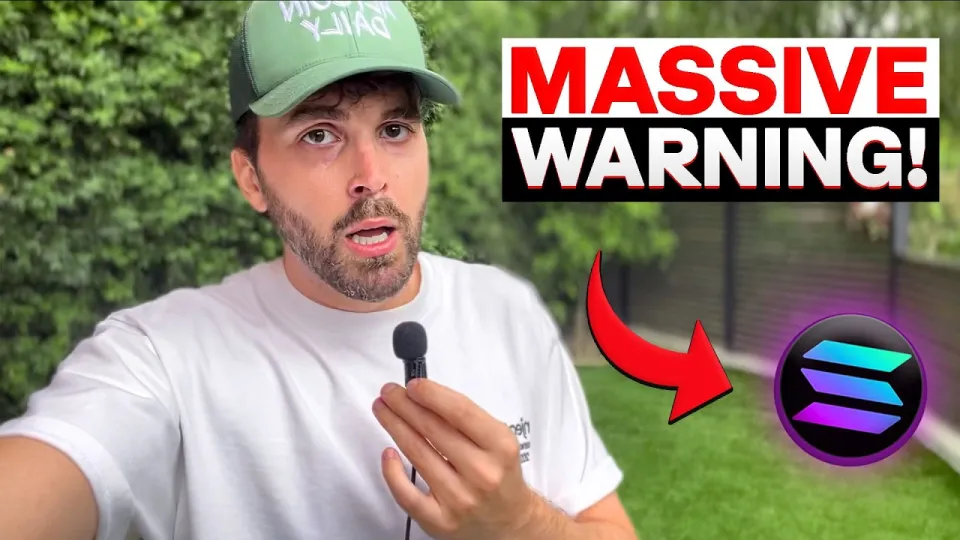
Video: My MASSIVE Warning To Crypto Holders
You can order the same kind of articles for your own video to boost it on YouTube and Google. Just message the Telegram bot @sat_sit_bot. Articles with your video embedded are written and posted by the bot itself — on popular topical sites (no ads). Your first 50 articles are free.
· based on the channel Altcoin Daily
Key takeaways
- The core warning for crypto holders is about where coins are stored, not about picking the next hot token.
- Exchange and app-based custody concentrates risk: the platform, not the holder, controls the keys.
- Regulation is moving faster than most retail portfolios are prepared for, and it reshapes which tokens and platforms stay accessible.
- Volatility is a feature of crypto, not an anomaly, so position sizing matters more than timing.
- Diversification across assets and custody setups reduces single-point failure risk.
A crypto holder's biggest risk is not a bad entry price but a bad custody setup: coins left on an exchange or inside a brokerage-style app are controlled by the platform, not by you. The practical warning is to move long-term holdings into self-custody, keep only trading capital on exchanges, and treat regulation and volatility as planning inputs rather than surprises. Platforms compete for deposits with welcome offers such as the Weex registration bonus, but a bonus never replaces a withdrawal plan.
What the crypto warning for holders actually says
The message is structural, not a price call. Altcoin Daily's breakdown frames the danger as a combination of platform dependency, regulatory change and the behavior of holders themselves during drawdowns. The argument runs in three parts:
- Custody risk: if a third party holds the keys, the holder owns an IOU, not the asset.
- Regulatory risk: rules change which tokens can be listed, traded or held on a given venue, and holders often learn about it after the fact.
- Behavioral risk: panic selling and leverage liquidation do more damage to portfolios than any single headline.
The video does not promise a crash date or a specific price target; it asks holders to stress-test their setup before the market does it for them. That is a different kind of warning than the usual "sell now" content, and it is why the discussion keeps returning to custody and platform choice rather than to chart patterns.
Self-custody versus exchange custody
Self-custody means the holder controls the private key or seed phrase; exchange custody means the platform does. The trade-off is simple: self-custody removes counterparty risk but adds personal responsibility for backups, while exchange custody is convenient but exposes the holder to the platform's solvency, security and compliance decisions.
A workable middle ground used by many long-term holders:
- Keep a hardware wallet for the core position and test a small transaction before moving size.
- Store the seed phrase offline in at least two separate physical locations, never as a photo or cloud note.
- Leave only active trading capital on exchanges and withdraw profits regularly.
- Use separate accounts or wallets for experiments, DeFi positions and long-term holdings.
The video's warning lands hardest on holders who treat an app balance as ownership. If a platform freezes withdrawals, changes listing rules or restricts accounts by jurisdiction, the holder has no direct claim on the underlying coins.
Regulation as a portfolio variable
Regulation is not a single event but a moving constraint that changes access. When rules shift, the first effects are usually visible in listing policies, staking availability, withdrawal limits and KYC requirements, not in the price chart. Holders should therefore track three things for every platform they use: which jurisdictions it serves, whether it publishes proof of reserves, and how quickly it has handled past withdrawal stress.
The same logic applies to tokens. Assets with heavy regulatory exposure can be delisted from major venues overnight, which affects liquidity even for holders who never sell. Diversifying across assets with different regulatory profiles is a defensive move, not a diversification exercise for its own sake.
Volatility and position sizing
Crypto volatility is structural: drawdowns of 50% or more have occurred repeatedly in major assets, and leverage turns those drawdowns into total losses. The warning for holders is to size positions so that a deep correction does not force a sale at the worst moment.
Practical rules that survive most cycles:
- Define the maximum portfolio share for crypto before buying, not after a rally.
- Avoid leverage on long-term holdings; liquidation risk is the fastest way to lose a thesis.
- Keep a stablecoin or fiat buffer for expenses so holdings are never sold under duress.
- Rebalance on a schedule rather than on emotion.
Holders who survived previous cycles usually credit position sizing and custody discipline, not timing, for staying in the market.
Common questions from crypto holders
Several recurring concerns come up whenever this warning is discussed. The first is whether brokerage-style apps are acceptable: they are convenient, but the holder does not control the keys, so they behave like exchange custody with extra layers. The second is whether decentralized lending protocols carry the same risk: the smart contract risk is different from platform risk, but it is still risk, and the token of a protocol is not the same product as the protocol itself. The third is whether waiting for a lower price is a strategy: it can be, but holders who stay out entirely take the opposite risk of missing a recovery. The fourth is whether regulation will kill crypto: the more common outcome is that it reshapes access, pushing activity toward venues and assets that comply.
Platform links from the breakdown
Any bonus or promotional offer should be evaluated against withdrawal terms, KYC requirements and the size of the position you actually plan to keep on the platform.
Conclusion
The warning for crypto holders comes down to control: control of keys, control of position size and control of exposure to regulatory change. Price will do what it does, but custody mistakes and forced sales are avoidable. Altcoin Daily's video breakdown is a useful checklist for auditing a portfolio before the next period of stress. Holders who want to act on it can start with the Weex deposit bonus and registration page and then verify every term before depositing.
Source: My MASSIVE Warning To Crypto Holders · Markdown version
Questions & answers
Is it safe to keep crypto on an exchange or a brokerage app?
It is convenient but not equivalent to ownership: the platform controls the keys and can freeze withdrawals, restrict accounts or change listing rules. Keeping only active trading capital there and moving long-term holdings to self-custody limits that counterparty risk.
Does regulation mean crypto holders should sell?
Not necessarily. Regulation usually changes access first, through listing policies, staking availability and KYC requirements. Holders should track which jurisdictions each platform serves and diversify across assets with different regulatory exposure rather than reacting to headlines.
Is decentralized lending safer than a centralized platform?
The risks are different, not absent. Decentralized protocols remove a custodian but introduce smart contract and liquidation risk, and holding a protocol's token is not the same as using its product. Position sizing and an understanding of the contract matter in both cases.
What is the biggest risk for a crypto holder?
Custody and behavior, not price alone. Coins held by a third party, leverage that forces liquidation and panic selling during drawdowns have ended more portfolios than any single market event, which is why self-custody and position sizing come first.